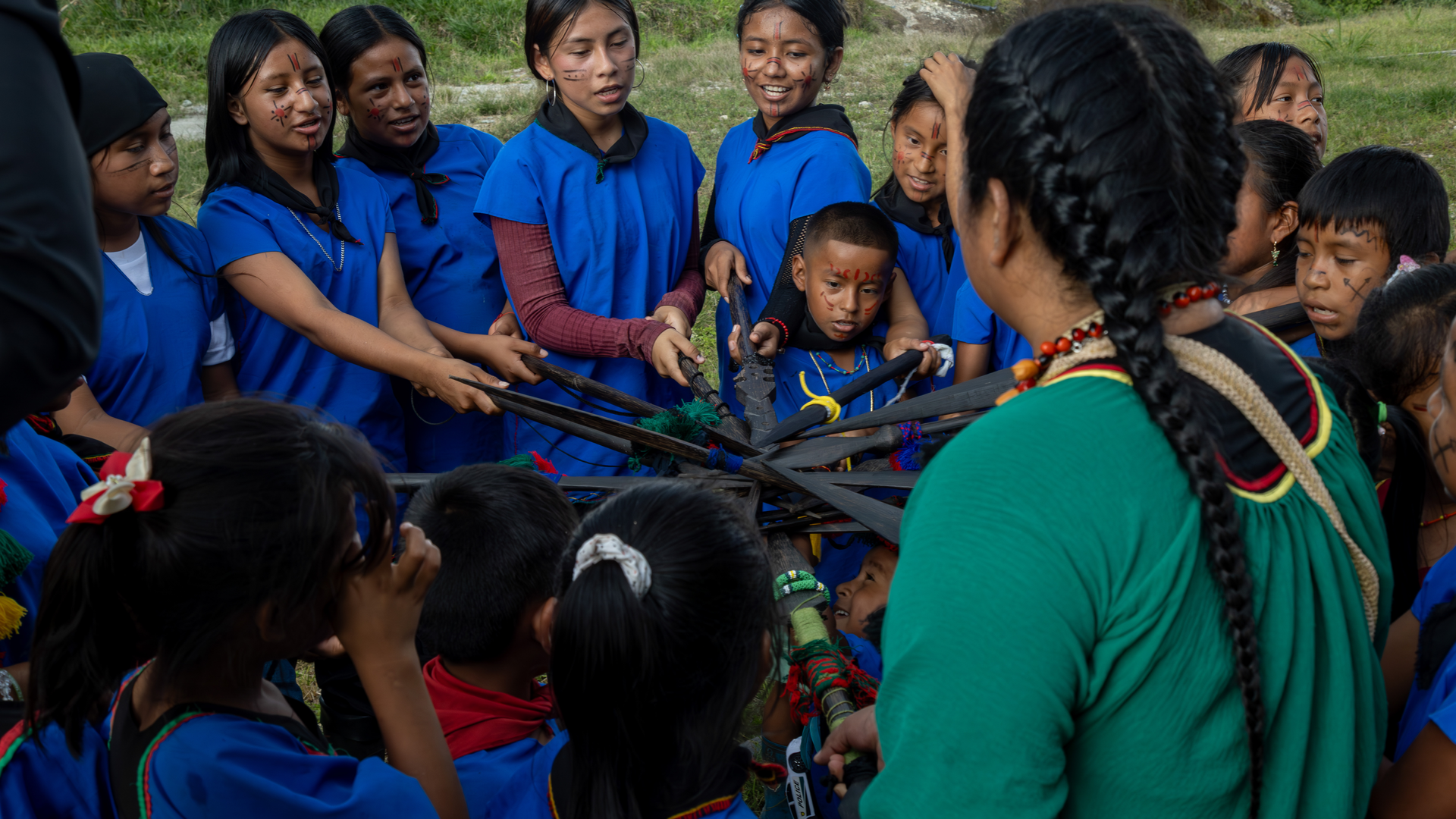
Description
As the eyes and ears of their respective communities
and nations, Indigenous land patrols, or Indigenous
Guards as they are known locally, combine ancestral
knowledge with digital monitoring technologies
(GPS, camera traps, drones, deforestation alerts)
to detect, denounce and deter environmental
threats to their vast territories in real time. Land
patrols then feed vital information and evidence
from across the territories back to community
leadership and assemblies, helping to spur collective
action to establish plans for effective territorial
management and defense rooted in their traditional
governance processes. This often involves the
development of Indigenous laws and mandates for
the non-violent expulsion of illegal actors (miners,
loggers, poachers) operating in their forests and
rivers, and to enforce their own communal hunting
and fishing regulations.
Building on 10 years of outsized impact working
with the Kofan, Siona, Siekopai and Waorani
nations, Amazon Frontlines will scale Indigenous led territorial defense strategies across more
than 1 million hectares of primary rainforest by
equipping Indigenous land patrols, known locally
as Indigenous Guards, with the training, tools and
networks necessary to protect their territories
from mounting environmental threats.
From 2025 to 2028, the project will expand their
frontline and capacity building model for Indigenous
Guards to reach 6 Indigenous nations and 76
rainforest communities, consolidating our support
for existing land patrols, and working to form new
land patrols with the Kichwa and Shuar nations.
Providing tailored accompaniment in each territory,
focused on the effective implementation of
monitoring technologies, also to help organize
community assemblies to facilitate a collective
analysis of threats, spur decision-making and
the development of territorial laws to regulate
external access and use of territories as a key
component of Indigenous forestry management.
To unify the regional formation of Indigenous
guards, the objectives will be:
Expanding the Land Defense School, bringing
together leaders from all 6 nations to take part in
a knowledge and skills exchange program that will
provide the next level of theoretical and technical
training needed for Indigenous communities to
develop robust territorial governance processes
for the immediate and long-term protection of
the Upper Amazon
